


When Swansea City and Wrexham are paired together, the easy headline is to call it a derby. Two Welsh clubs, proud traditions, passionate supporters. Yet the more you look at it, the less convincing that label becomes. Rivalries are built on regular clashes, on fixtures that shape seasons and stir emotions. Swansea and Wrexham have not shared that kind of rhythm. Their league meetings are scattered across decades, and the sense of animosity that defines a true derby is missing.
Wrexham hold the League Upper Hand
The statistic that lingers is Swansea’s failure to beat Wrexham in the league since 1993. More than thirty years without a victory is remarkable, and it has become a talking point whenever the fixture reappears. But does it make the game a rivalry? For Swansea fans, the frustration is real, yet it does not carry the weight of the Cardiff City derby. That is the fixture that defines Swansea’s identity, the one that sparks intensity and local pride. Wrexham, by contrast, feel more like distant relatives than sworn enemies.
For Wrexham, the record is a source of pride. Each league meeting has been another chance to reinforce their resilience, another reminder that history can tilt in unexpected ways. For Swansea, the drought is a curiosity rather than a defining wound. Their story in recent decades has been shaped by Premier League football, European nights, and a reputation for stylish play. Wrexham’s journey has been different, marked by financial struggles, non-league exile, and now a revival under new ownership. The contrast in fortunes makes the statistic even more striking, but it does not transform the fixture into a derby.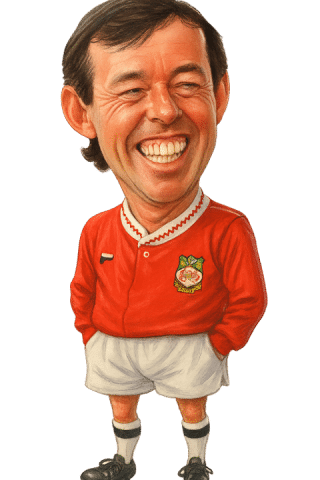
What it does highlight is the unpredictability of football history. Swansea may have been the bigger club in terms of profile and success, but Wrexham have held the upper hand in league meetings. That streak has become part of Welsh football folklore, not because it fuels rivalry, but because it defies expectation.
So when Swansea and Wrexham meet again, it will be watched with interest, but not with the fire of a derby. It is not a rivalry in the truest sense. It is a quirk of history, a record waiting to be broken, and a reminder that football often writes its own strange stories. However, Wrexham’s record of fifteen wins in thirty league clashes stings a little and the chance to move that slightly more towards us will be there on Friday.
The last meeting – farewell to the Vetch
The Vetch Field’s last game wasn’t just another fixture on the calendar. It was a farewell, a wake, and a celebration rolled into one. Swansea against Wrexham in the FAW Premier Cup final gave the old ground a stage worthy of its history, but the real drama was in the stands and on the pitch after the whistle.
For ninety‑odd years the Vetch had been Swansea’s home, a place where generations stood shoulder to shoulder, where fathers brought sons, where victories and heartbreaks were carried in the bones of the place. By May 2005 it was crumbling, outdated, and destined to be replaced by the new stadium at Morfa. Yet on that night it was alive, louder and more defiant than ever.
The match itself had tension, Swansea edging Wrexham 2–1, but the score was almost incidental. What mattered was the chance to say goodbye properly. Fans sang with a kind of urgency, as if every chant had to carry the weight of decades. When the final whistle blew, the Vetch became something else entirely. Supporters poured onto the pitch, not in anger but in reverence. Seats were lifted, turf dug up, signs carried away. These weren’t souvenirs in the commercial sense — they were fragments of identity, pieces of a ground that had been woven into the fabric of the city.
It was chaotic, yes, but it was also deeply human. People wanted to hold onto the place, to take a bit of it home, because they knew they’d never stand on those terraces again. The players understood it too. Lifting the cup mattered, but they were part of something bigger: the closing of a chapter that had defined Swansea City for nearly a century.
The Vetch’s farewell wasn’t polished or choreographed. It was messy, emotional, and real. That’s why it mattered. The new stadium promised progress, comfort, and modernity, but it could never replicate the grit and intimacy of the Vetch. The old ground had character in every corner, from the North Bank’s roar to the cramped changing rooms. It was imperfect, but it was ours.
Looking back now, that night feels less like a football match and more like a communal rite. A city gathered to honour its past, to mourn the loss of a place that had shaped its Saturdays, its friendships, its very sense of belonging. Swansea moved forward, as clubs must, but the Vetch’s final game ensured it would never be forgotten.
The scoreline fades. The memories don’t. The last whistle at the Vetch was more than the end of a game — it was the end of an era, and 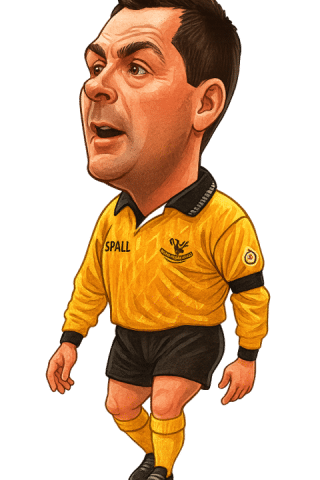 the beginning of carrying those memories into whatever came next.
The Last League Win – Corny on the spot
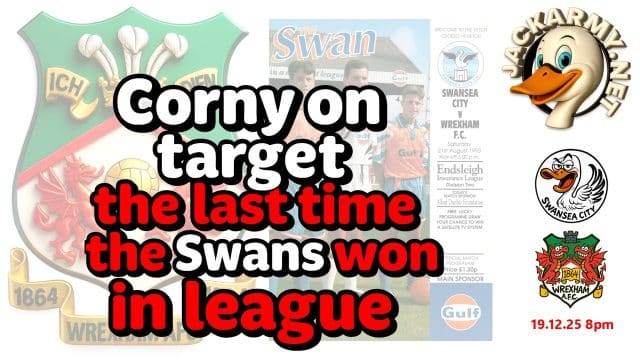
On August 21, 1993, Swansea City hosted Wrexham at the historic Vetch Field in a Division Two fixture that drew 5,383 supporters. The match was a spirited Welsh derby, full of momentum swings, individual brilliance, and the kind of drama that defined lower‑league football in the early 1990s. Ultimately, Swansea emerged 3–1 winners, but the contest was closer than the scoreline suggests.
The opening exchanges were cagey, with both sides probing for weaknesses. Wrexham, managed by Brian Flynn, looked organized and disciplined, while Frank Burrows’ Swansea sought to impose themselves with attacking width. The breakthrough came in the 40th minute when Wrexham striker Steve Watkin capitalized on a defensive lapse to put the visitors ahead. Watkin’s finish silenced the home crowd and gave Wrexham a deserved lead after a period of sustained pressure.
Swansea responded swiftly. Just four minutes later, defender Mark Harris surged forward and found the net, leveling the score at 1–1 before halftime. The equalizer shifted momentum back to the Swans, ensuring the second half would begin on a knife’s edge.
The second half saw Swansea gradually assert control. Substitutions played a role, with Jon Ford replacing Andy Cook and Shaun Chapple coming on for John Hodge, injecting fresh energy into the home side. Wrexham also made changes, but Swansea’s midfield began to dominate possession.
In the 78th minute, Colin Pascoe struck to give Swansea the lead. Pascoe, a seasoned campaigner, showed composure in front of goal, finishing clinically to make it 2–1. The Vetch Field faithful erupted, sensing the tide had turned decisively.
Six minutes later, Swansea sealed the victory. Captain John Cornforth converted a penalty in the 84th minute, extending the lead to 3–1. Cornforth’s strike epitomized Swansea’s resilience and ability to punish mistakes. Wrexham, despite their efforts, could not recover from the double blow.
Key Performances and Tactical Notes
- Roger Freestone, Swansea’s goalkeeper, provided stability at the back, ensuring Wrexham’s attacking forays were contained after the equalizer.
- Wrexham’s midfield pairing of Mike Lake and Tony Humes worked tirelessly, but struggled to cope with Swansea’s late surge.
- The match highlighted the importance of leadership: Cornforth’s influence in midfield and his decisive penalty underscored Swansea’s edge in experience.

The attendance of over 5,000 reflected the passion surrounding Welsh football rivalries. For Swansea, the win was crucial in building early‑season momentum in Division Two. For Wrexham, the defeat was a reminder of the challenges of sustaining leads away from home, particularly against seasoned opponents.
While not a headline fixture in the grand history of either club, this game encapsulated the grit and unpredictability of lower‑league football in the 1990s. Swansea’s ability to rally after falling behind demonstrated resilience, while Wrexham’s spirited performance showed their competitive edge, even in defeat. (With thanks to the Wrexham Archive)
This article first appeared on JACKARMY.net.